



Femto-LASIK
Proven. Precise. With the widest correction range.
Up to 45Short-sightedLong-sightedAstigmatism
 Personal consultationWe get back to you usually within one working day.
Lens surgery · Vision correction
Far and screen. Fewer halos at night.
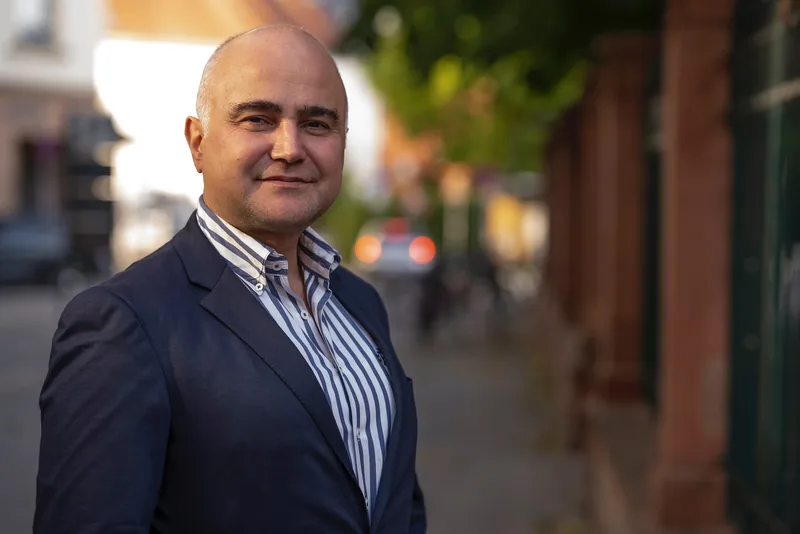 Medical content prepared for review by Dr. med. Levent Kanal, head surgeon
An EDoF lens (extended depth of focus) is an artificial lens that stretches one focal point into a continuous range — from far to screen distance — instead of splitting light into separate zones. It replaces the natural lens in a lens exchange or cataract surgery. The result: driving, TV and screen without glasses, with fewer halos at night than a multifocal lens. For small print, light reading glasses are sometimes still needed.
Range
Far · screen
One continuous focus range
Both eyes
Two consecutive days
One trip, about four days
Anaesthesia
Eye drops
No injection, no general anaesthesia
Glasses afterwards
For small print
Light reading glasses, sometimes
Halos at night
Fewer
Close to a monofocal lens
Suitable for
45 and older
Lens exchange or cataract surgery
A first orientation. The examination gives the final answer.

Not sure? Tell us about your eyes. The head surgeon gives you a first answer, usually within one working day.
Three lens types, three trade-offs. Your eyes and your daily life decide.
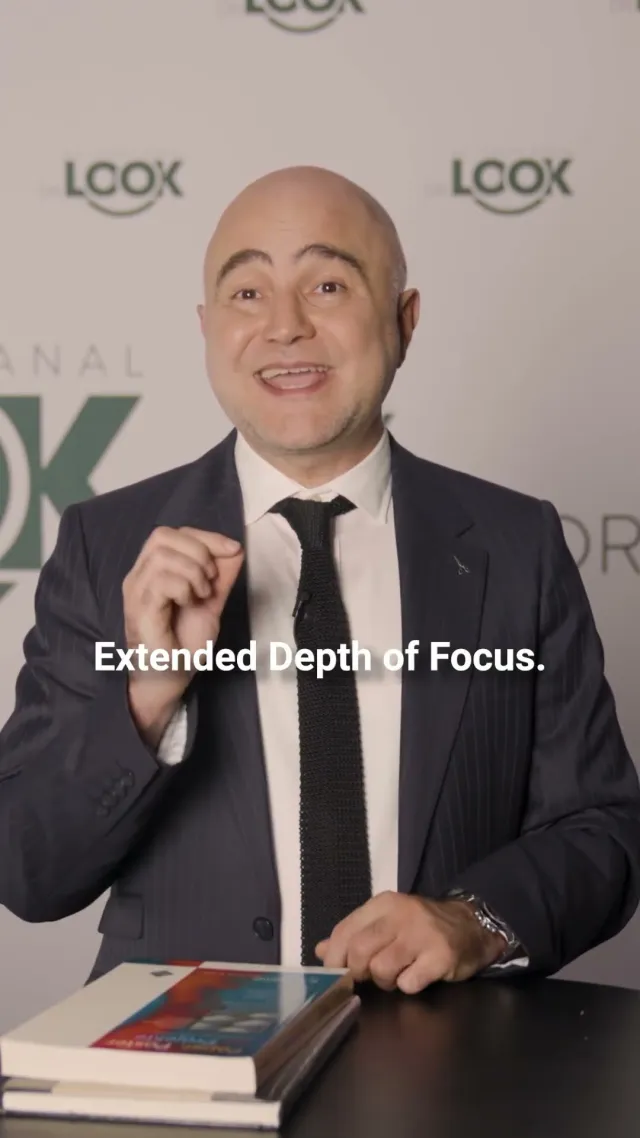
Multifocal vs. EDoF lenses
Which lens for which life — in one minute.
| EDoF | Multifocal | Monofocal | |
|---|---|---|---|
| Distances | Far and screen | Near, screen and far | One distance |
| Reading glasses | For small print | Rarely | Yes, for near |
| Halos at night | Fewer | Possible at first | Very low |
| Contrast in dim light | Good | Slightly reduced | Best |
| Adaptation | Short | A few weeks | None |
| Astigmatism | Toric version | Toric version | Toric version |
| Both eyes | Two consecutive days | Two consecutive days | Two consecutive days |
| Typical choice | Driving, screen work | Reading, office, hobbies | Sharpest distance, simplest |
One examination, one eye per day on two consecutive days, a final check. All at our surgical centres in Wiesbaden and Düsseldorf.
Visit 1 · about 90 minutes
Visits 2 and 3 · one eye each
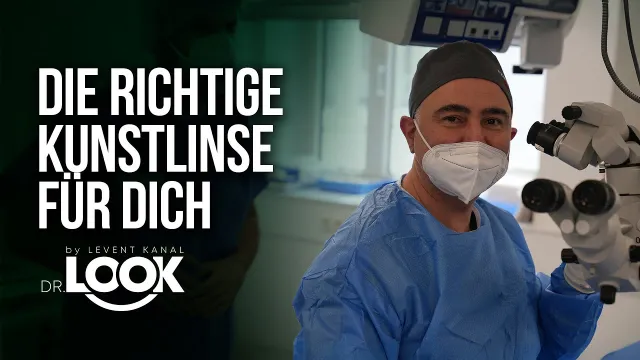
Artificial lenses compared
Monofocal, multifocal or EDoF — Dr. Kanal explains.
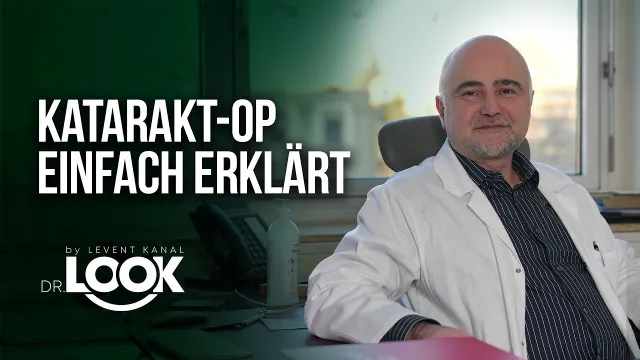
Understanding cataract surgery: how the procedure works
The same steps as a lens exchange, explained.
The lens: extended depth of focus
Visit 4 · next morning
Dr. med. Levent Kanal · Head surgeon
“EDoF lenses are my answer for patients who drive at night and live at the screen. They give up a little near vision for clean, quiet vision after dark. The right question is not which lens is best, but which distances your day is made of.”
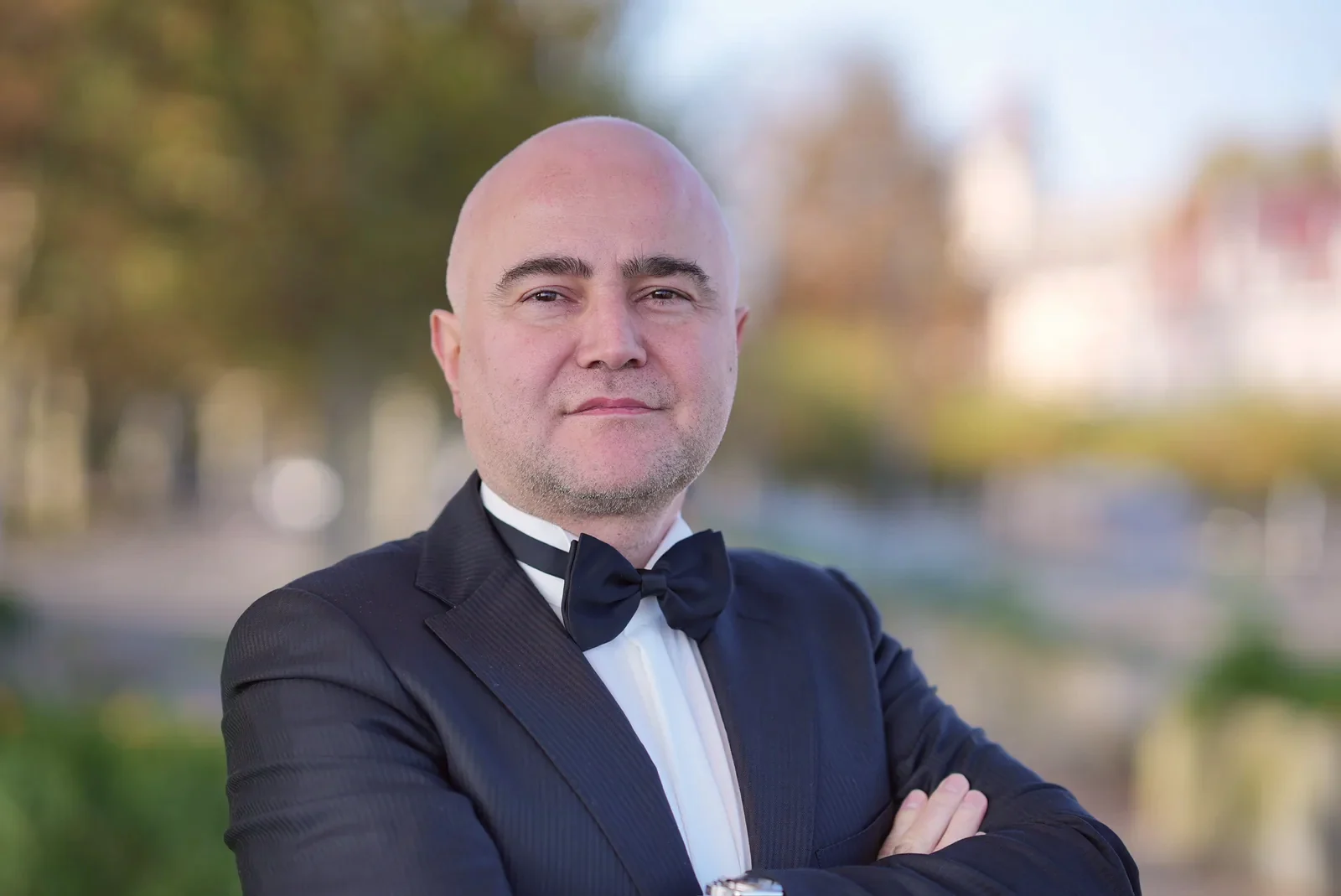
Cataract and corneal surgeon · trainer of eye surgeons · 25+ years
Every lens implantation is performed by the head surgeon himself.
The first days, and what you can realistically expect.
| Screen, reading, TV | next day; both eyes together from day 4 |
| Driving | after the final check |
| Shower, hair washing | next day, no water in the eyes for 1 week |
| Sport, gym | after 2 weeks |
| Eye make-up | after 2 weeks |
| Swimming, sauna | after 4 weeks |
What to expect
Distance vision clear the next day, screen distance within days. Final result after about 3 months. Halos at night are fewer than with a multifocal lens. The lens stays for life.
What it does not do
It does not replace reading glasses for small print in every situation: menus in dim light or tiny labels may still need light glasses. It does not give continuous focus like a young eye.
Complication rates are low in long-term studies. Low is not the same as none. Here is the complete list.
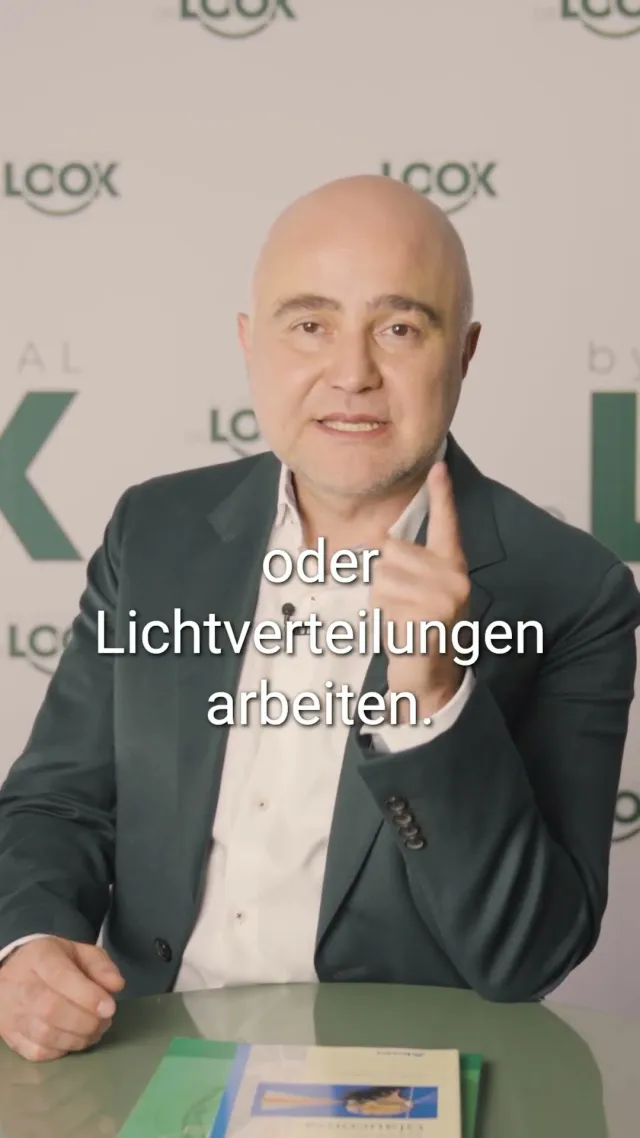
Multifocal lens: halos at night?
Dr. Kanal answers in one minute.
Small print may still need glasses
The extended range ends around screen distance. For tiny print in dim light, light reading glasses may be needed. We say this before the operation.
Mild halos at night
Fewer than with a multifocal lens, but not zero. They fade for most within weeks.
Adaptation
Short, but the brain still learns the new range over days to weeks.
After-cataract
In some patients the capsule behind the lens clouds months or years later. A short laser treatment (YAG) clears it in minutes, once.
Residual value
Rarely the target is not fully reached. Glasses for one distance, a laser touch-up or a lens exchange are possible.
Very rare complications
Infection, swelling of the macula or a retinal detachment are very rare. Our centres work to clinical hygiene standards, and your drops are part of that protection.
“Trust begins with openness. We go through every point on this list together, with your own measurements on the screen.”
Dr. med. Levent Kanal · Head surgeon
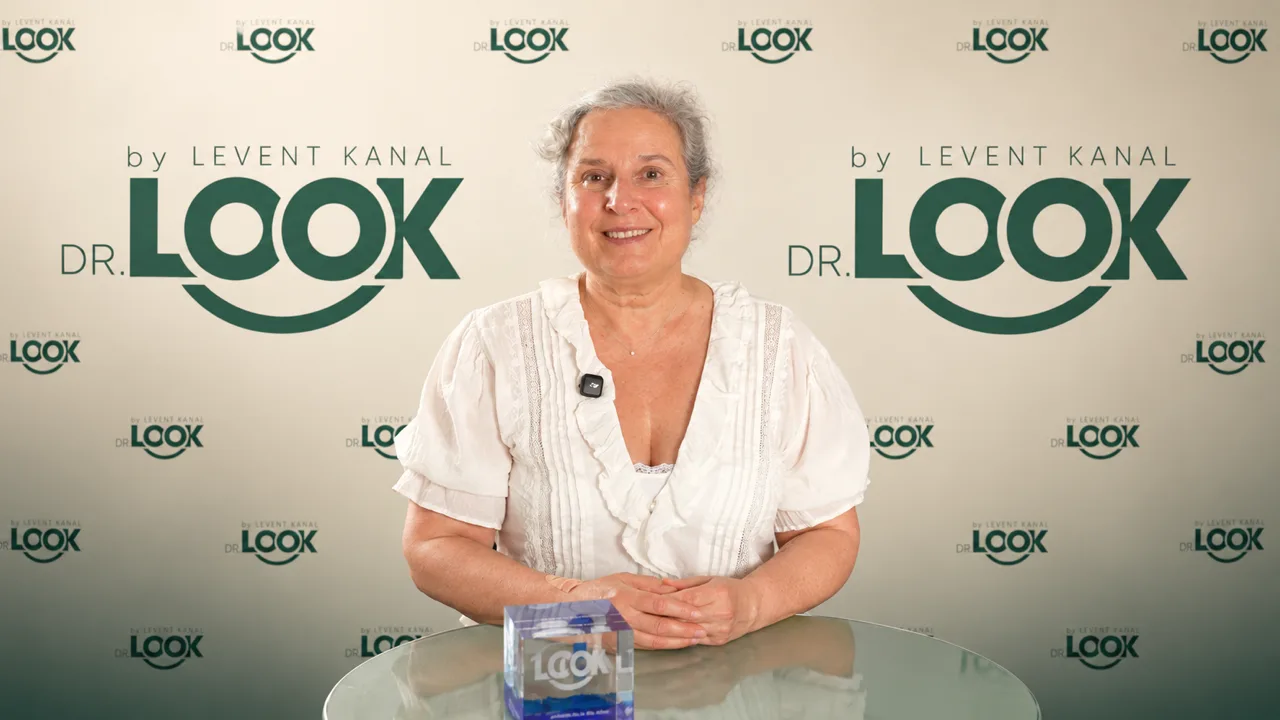
Patient story
“I can see everything again — near, far, and the faces of my grandchildren. I should have done it years ago.”
No price list on the website: the quote depends on your eyes and the method. This is what you can expect.
When you get the quote
After the examination, in writing, before you decide. No obligation.
What the quote lists
Examination, the lens and the treatment of both eyes, the drops for the first weeks and the checks in our clinics — item by item.
Insurance and invoice
A private medical service in Germany. You receive an itemised invoice (GOÄ) for your insurer. Ask your insurer beforehand what they reimburse.
How you pay
By bank transfer or card, in euros. Payment options for patients from abroad are explained with the quote.
Prices are not published online because they depend on the findings of your examination. We answer cost questions personally: ask us.
Two steps. First we check remotely whether an EDoF lens is right for you. Only then do you travel — once, for about four days.
1Before you travel
You tell us about your eyes and your current values in a private conversation. Dr. Kanal says whether an EDoF lens is realistic for you. If the answer is no, you do not travel.
What we will ask you
You get a personal answer from Dr. Kanal, usually within one working day.
Day 1 · Examination
About 90 minutes. Lens choice with Dr. Kanal.
Day 2 · First eye
About two hours in the clinic, 15 minutes of surgery.
Day 3 · Second eye
Check of the first eye, then the second operation.
Day 4 · Final check
In the morning. Then you travel home.
At home
Routine eye check-ups near your home.
Coming from further away? The schedule can differ from this plan. Ask us before you book anything. Ask about your plan · WhatsApp
2Your visit
Once the remote assessment is positive, we plan the four days around your arrival in Wiesbaden or Düsseldorf. All later checks take place near your home.
Which airport, and how do I reach the clinic?Languages
Consultation and all documents in German and English.
Insurance and invoice
A private medical service in Germany. Itemised invoice for your insurer. Written quote after the examination.
Aftercare at home
Written report for your eye doctor. We stay reachable by WhatsApp for questions after you return.
Live in Rhine-Main or the Rhineland? Then no travel planning is needed. Your follow-up checks can take place at any of our 12 locations. Find your nearest clinic
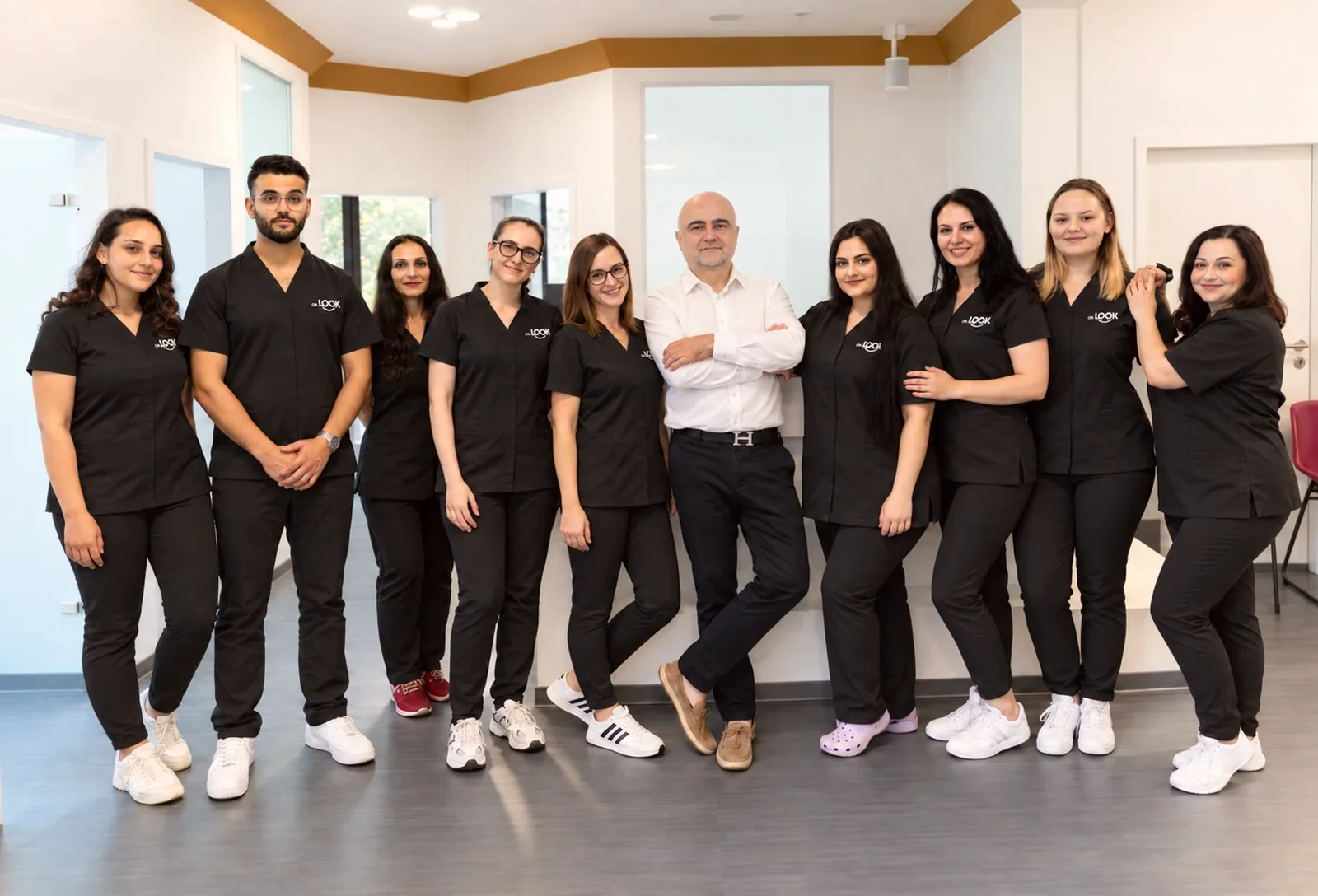
Dr. med. Levent Kanal operates on every patient himself, in Wiesbaden and Düsseldorf: thousands of operations in 25 years. He leads a large team and trains young surgeons.
25+ years
of surgical experience
Thousands
of operations, every one by the head surgeon
12 locations
one surgeon, two surgical centres
Large team
led personally; young surgeons trained here
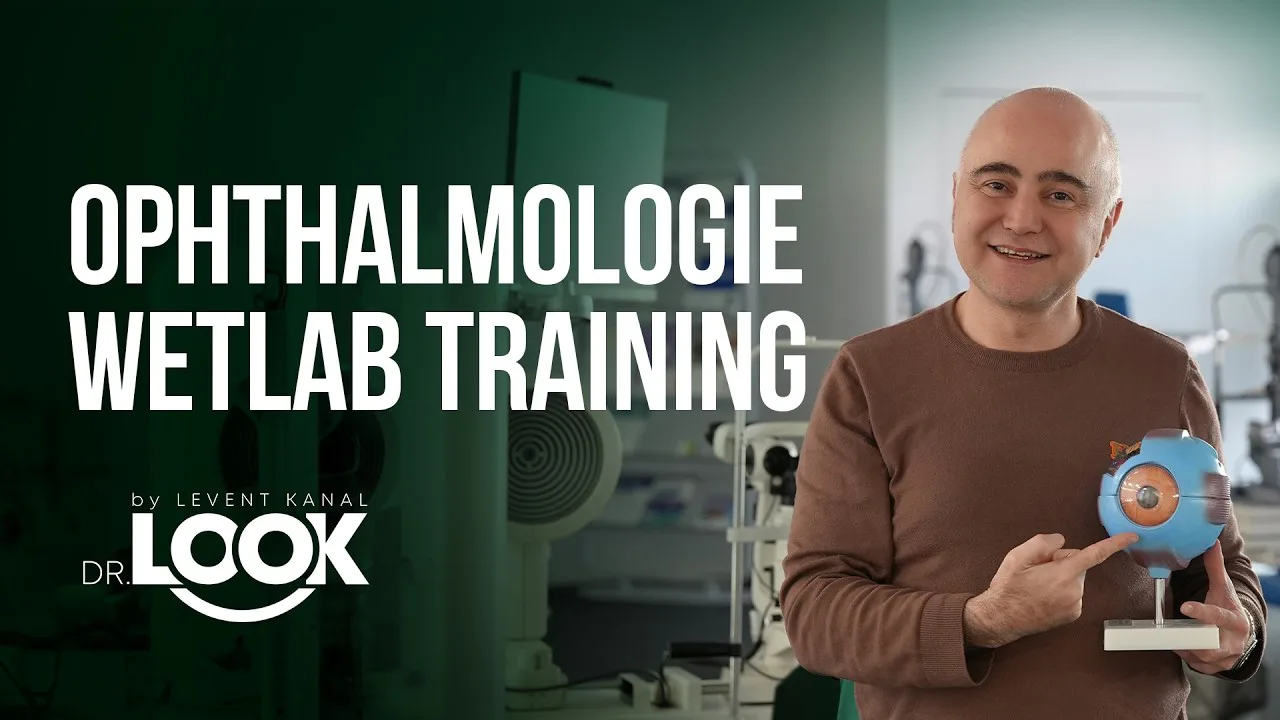
Training the next generation of eye surgeons
Ophthalmology wetlab in Aschaffenburg · Dr. Kanal as instructor
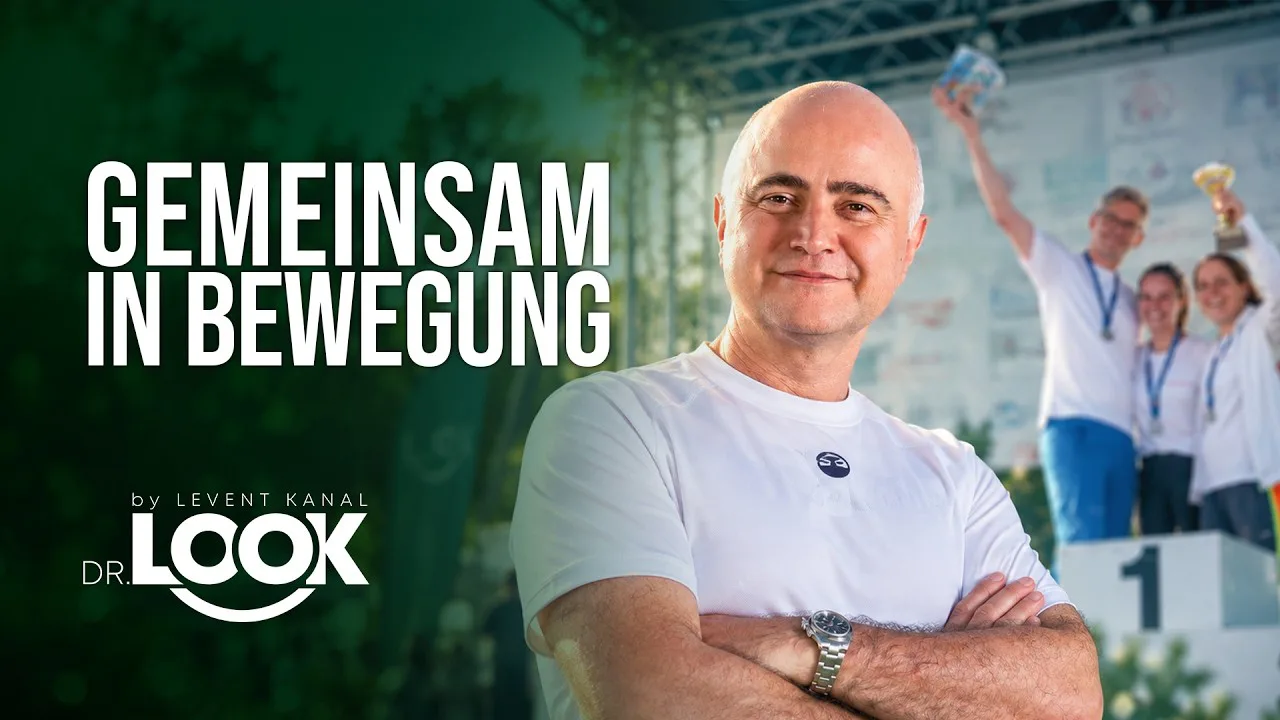
Social commitment
Neuss integration run · sport connects people
Modern eye medicine for clear vision
Dr. Levent Kanal
Why Dr. Look Artificial lenses compared — monofocal, multifocal or EDoF?Lens surgery
 Is a multifocal lens right for everyone?Lens surgery
 Crosslinking for keratoconus: effect & benefitsEye health
Extended depth of focus: the lens stretches one focal point into a continuous range from far to screen distance, instead of splitting light into separate zones. That gives fewer halos than a multifocal lens.
For driving, TV and screen usually not. For small print in dim light, light reading glasses are sometimes needed.
Neither is better; they trade differently. EDoF gives far and screen with fewer halos. Multifocal adds small print, with more halos at night. Your daily life decides.
Yes. Fewer halos than with a multifocal lens is the main reason night drivers choose EDoF. Mild halos in the first weeks fade.
No. The second eye follows the next day, after a check of the first. Both are done in one trip of about four days.
No. Drops numb the eye and you may get a mild sedative. You see light and movement during the 15 minutes, no detail.
No. The natural lens is gone. An after-cataract of the capsule can occur and is cleared with a short laser treatment if it does.
Dr. med. Levent Kanal, the head surgeon, performs every lens implantation himself. In Wiesbaden and Düsseldorf.
About four days: examination, first eye, second eye, final check. We first assess remotely whether the treatment is realistic for you; then you travel once. Afterwards, routine eye check-ups near your home.
You get a written quote after the examination, listing the lens type and everything included. In Germany this is a private service.
Two surgical centres and ten clinics. Choose your region and get directions in one tap.
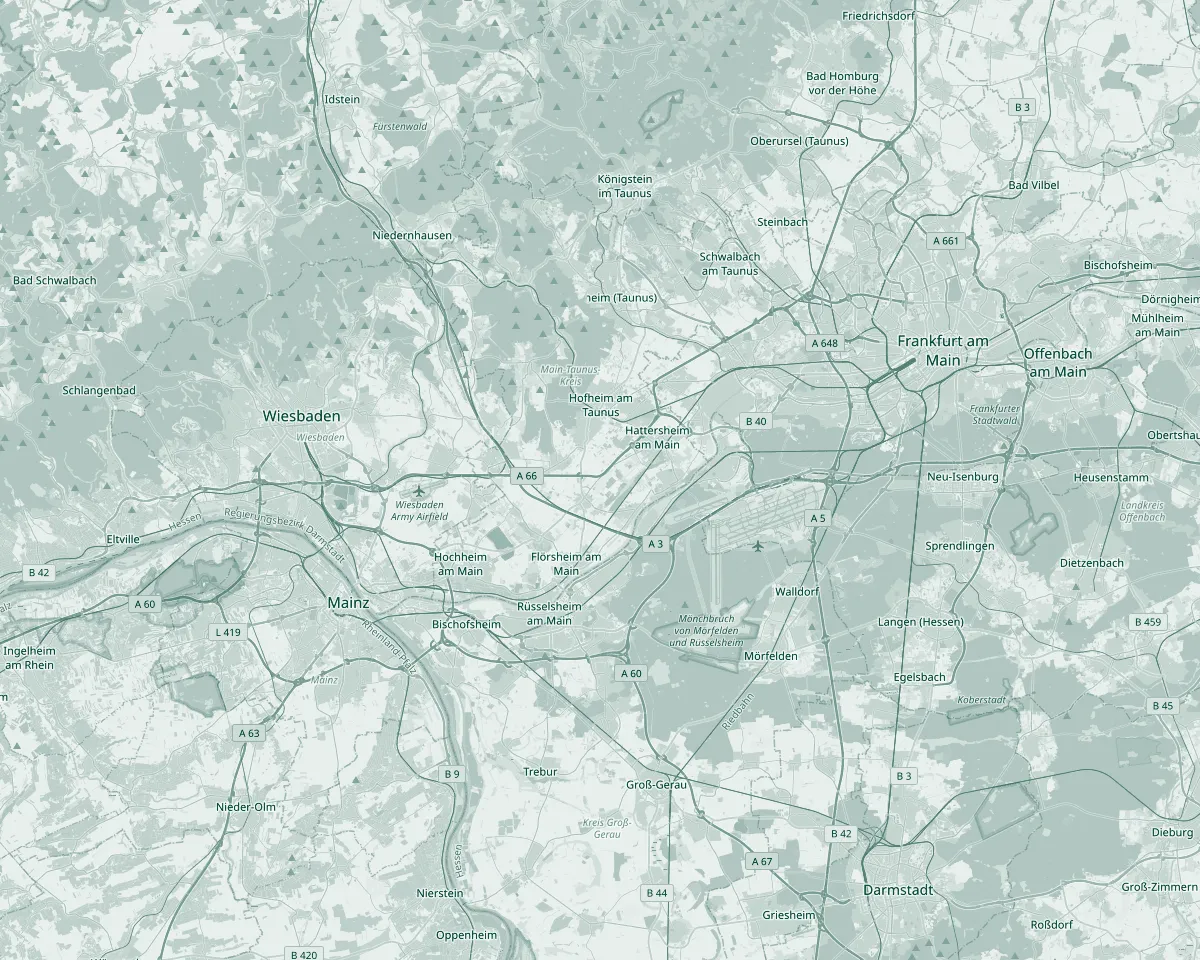
Choose your surgical centre. The map shows the airport, the other clinics and the way to us.
Laser or lens: the examination shows which treatment fits. Here are the alternatives at a glance.
Proven. Precise. With the widest correction range.

Near and far vision. Without reading glasses.

Reading, screen and driving with one lens.

Flapless. Minimally invasive. The next generation.

The natural lens is replaced. No cataract later in life.

Outpatient, about 15 minutes per eye. Clear the next morning.
Scientific sources
Peer-reviewed studies and medical societies only. No manufacturer or commercial sources.
Extended depth-of-focus technology in intraocular lenses
Kohnen T, Suryakumar R · Journal of Cataract & Refractive Surgery 2020;46(2):298–304
Efficacy and safety of extended depth of focus intraocular lenses in cataract surgery: a systematic review and meta-analysis
Liu J, Dong Y, Wang Y · BMC Ophthalmology 2019;19:198
Multifocal intraocular lenses and extended depth of focus intraocular lenses
Breyer DRH, Kaymak H, Ax T, Kretz FTA, Auffarth GU, Hagen PR · Asia-Pacific Journal of Ophthalmology 2017;6(4):339–349
Efficacy and safety of multifocal intraocular lenses following cataract and refractive lens exchange: metaanalysis
Rosen E, Alió JL, Dick HB, Dell S, Slade S · Journal of Cataract & Refractive Surgery 2016;42(2):310–328
Assessment and quality assurance of refractive surgical procedures
Kommission Refraktive Chirurgie (KRC) of the German Ophthalmological Society (DOG) and the Professional Association of Ophthalmologists (BVA)
IOL implants: lens replacement after cataracts
American Academy of Ophthalmology, EyeSmart patient information
This website uses cookies
We use cookies and similar technologies to keep the website working, to play embedded videos (YouTube) and, only if you allow it, to understand how the site is used. We do not show advertising. You can change your choice at any time under "Cookie settings" in the footer. Details in our privacy policy.
Necessary 1
Necessary cookies keep the website working: they remember your cookie choice and protect the contact form from spam. The site cannot function properly without them.
Preferences 0
Preference cookies let a website remember settings that change how it behaves or looks, such as your language or region. We do not use this type of cookie.
Statistics 0
Statistics cookies help website owners understand how visitors use the site by collecting anonymous data. We currently use no analytics service; if one is added later, it will only run with your consent.
Marketing 1
Marketing cookies are set by third-party services when their content is loaded. On this website that is YouTube (Google), used only to play the embedded videos; we show no advertising. Muted background clips play automatically; other videos load only when you play them.
About cookies
Cookies are small text files that a website stores in your browser. We use them to keep the site working and to remember your cookie choice. Your consent applies to drlook.eu and is stored in your browser for 12 months. You can change or withdraw it at any time under "Cookie settings" in the footer. How we handle your data is described in our privacy policy.